Why Patients Feel “Off” Despite Normal Labs
The Clinical Frustration
Every clinician has seen it.
A patient walks in with persistent symptoms:
- Fatigue
- Brain fog
- Mood changes
- Weight resistance
They’ve already had testing done.
Labs are reviewed.
And the conclusion is:
“Everything looks normal.”
The Problem With That Answer
From a clinical standpoint, this creates a difficult position:
- The patient still feels unwell
- The data doesn’t explain why
- The next step isn’t clear
From the patient’s perspective, it’s even more frustrating:
- They don’t feel heard
- They don’t feel understood
- And they leave without answers
This is one of the most common—and most unresolved—scenarios in modern medicine.
What Traditional Testing Misses
Traditional lab testing plays an important role.
But it has limitations.
1. Static Snapshots
Labs measure what’s happening at a single moment in time.
They don’t show:
- How a system behaves under stress
- How it adapts over time
- Or why it trends in a certain direction
A patient can fall within “normal range” and still:
- Be suboptimal
- Be trending toward dysfunction
- Be experiencing symptoms driven by underlying patterns
2. Lack of Genetic Context
Labs show current expression.
But they don’t explain:
- Why that expression exists
- What predispositions are influencing it
- How the system is likely to behave long term
Without genetic context, clinicians are left interpreting:
- What is happening
But not:
Why it’s happening.
Genetics as the Missing Layer
Genomics fills this gap.
But only when interpreted correctly.
Predisposition ≠ Destiny
A key principle:
Genetics does not determine outcomes. It influences tendencies.
This distinction matters.
Genomics reveals:
- How a patient is wired biologically
- Where inefficiencies may exist
- How systems are likely to respond under stress
Not what will happen—but what is more likely to happen.
Biological Tendencies
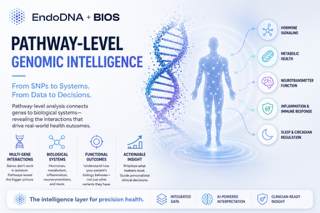
For example, genetics can reveal tendencies in:
- Hormone metabolism
- Neurotransmitter function
- Inflammatory response
- Detoxification capacity
These tendencies shape:
- How symptoms develop
- How patients respond to interventions
- Why two patients with the same labs feel completely different
This is the layer traditional testing cannot capture.
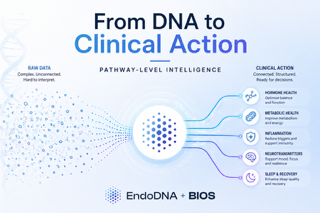
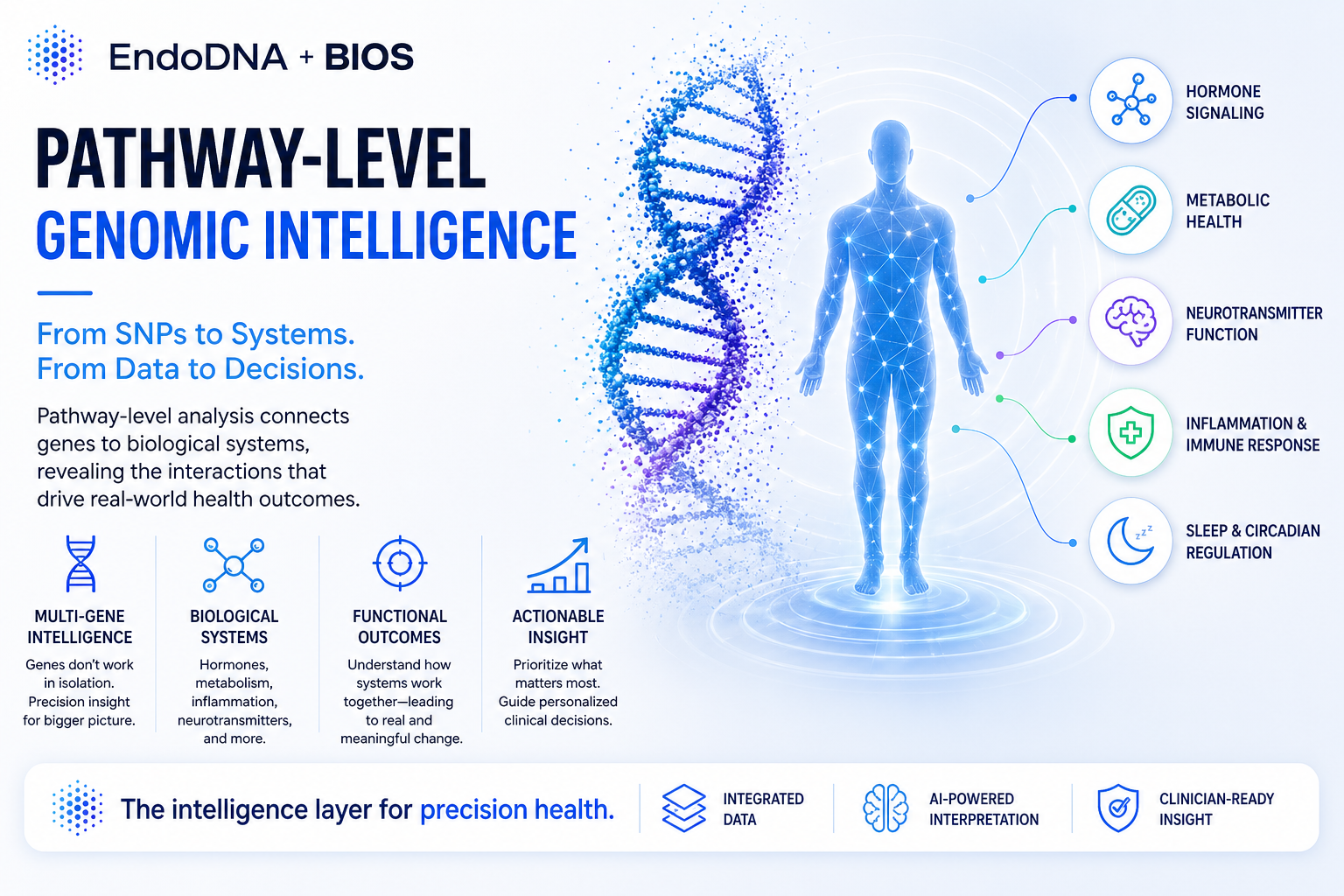
As outlined in the EndoDNA framework, clinical value comes from combining context + structure + application—not raw data alone
Understanding Systems Driving Symptoms
Symptoms are not random.
They are outputs of biological systems.
When labs appear normal but symptoms persist, the issue often lies in how systems are functioning—not whether they are broken.
Key Systems That Drive Symptoms
Hormones
- Estrogen, testosterone, cortisol regulation
- Sensitivity, metabolism, and signaling—not just levels
Metabolism
- Insulin signaling
- Energy production
- Nutrient utilization
Neurotransmitters
- Dopamine, serotonin, GABA balance
- Stress response and mood regulation
Inflammation
- Immune activation patterns
- Chronic low-grade inflammation
These systems don’t operate independently.
They interact.
And small inefficiencies across multiple systems can create real symptoms—without abnormal labs.
Real Clinical Scenarios
This is where genomics becomes clinically meaningful.
Fatigue
Labs may be normal.
But genomics may reveal:
- Inefficient energy metabolism
- Cortisol regulation patterns
- Mitochondrial pathway tendencies
Brain Fog
Standard labs often miss it.
Genomics can uncover:
- Neurotransmitter imbalances
- Detoxification inefficiencies
- Inflammatory signaling
Hormone Imbalance
Hormone levels may fall within range.
But genetics may show:
- Altered estrogen metabolism
- Androgen sensitivity differences
- Cortisol interactions
Weight Resistance
Patients may be doing everything “right.”
Genomics can reveal:
- Insulin pathway inefficiencies
- Appetite regulation patterns
- Metabolic adaptation tendencies
The Pattern
In each case:
- Labs show the what
- Genomics explains the why
This is the shift from symptom-based care to system-based understanding.
Turning Insight Into Action
Insight only matters if it leads to better care.
This is where genomics becomes powerful—when it informs action.
Personalized Interventions
With pathway-level understanding, clinicians can:
- Target the right systems first
- Reduce trial-and-error protocols
- Personalize treatment strategies
Instead of:
- Broad, generalized approaches
Care becomes:
- Specific
- Structured
- Biologically aligned
Better Patient Communication
One of the biggest benefits is clarity.
When patients understand:
- Why they feel the way they do
- How their biology is functioning
- What the plan is moving forward
Everything changes:
- Trust increases
- Adherence improves
- Outcomes follow
From Confusion → Clarity
This is the real value of genomics:
Not more data.
But better explanations—and better decisions.
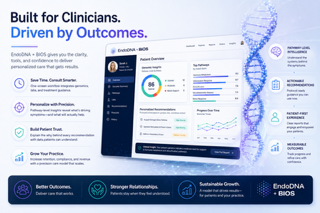
Platforms like BIOS are designed to translate genetic and clinical data into structured, clinician-ready insight—connecting symptoms, systems, and treatment direction in one place
The Bottom Line
“Normal labs” don’t always mean optimal health.
They often mean:
- The system hasn’t crossed a threshold
- But something is still off
Genomics provides the missing layer:
- Revealing underlying patterns
- Explaining persistent symptoms
- Guiding more precise care
It shifts the clinical model from:
Treating symptoms
To:
Understanding systems
And that’s where real progress begins.