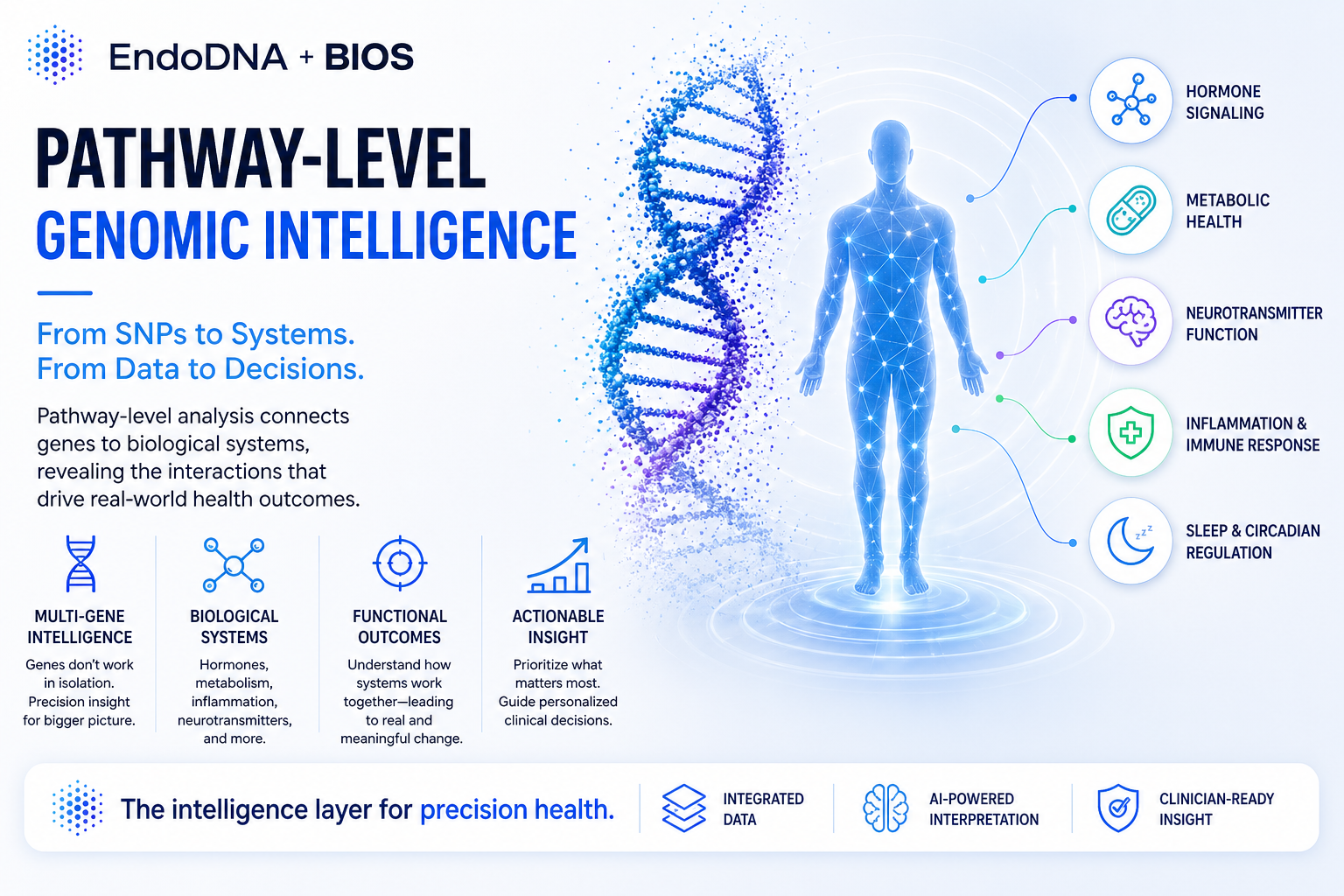
What Is Pathway-Level Genomic Intelligence?
The Limits of Traditional Genetic Reports
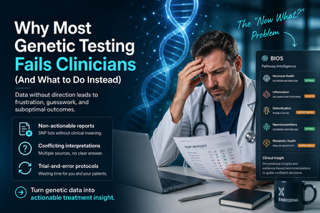
Genetic testing has become widely accessible—but for most clinicians, it still falls short in practice.
The majority of reports today are built around:
• Trait-based outputs (e.g., “increased risk for X”)
• SNP-based analysis (individual genetic variants)
While informative, these formats create a critical problem:
They rarely translate into clear clinical action.
A typical report might tell you:
• A patient has a variant in a specific gene
• That variant is associated with a potential outcome
But it doesn’t tell you:
• How that gene interacts with other systems
• What it means in the context of the patient’s symptoms
• What to actually do next
This is why many clinicians experience the same frustration:
Genetic data is available—but not clinically useful.
As outlined in the EndoDNA framework, the gap isn’t data access—it’s the lack of structured interpretation and application
What “Pathway-Level” Actually Means
To understand pathway-level genomic intelligence, you have to shift how you think about biology.
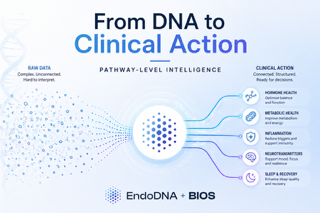
Instead of looking at individual genes, this approach looks at systems.
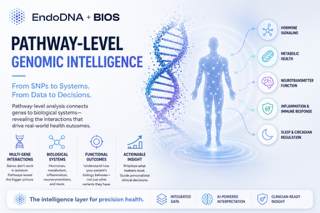
1. Biological Systems, Not Isolated Markers
Pathway-level analysis organizes genetics into real physiological systems, such as:
• Hormone metabolism and signaling
• Metabolic and insulin pathways
• Inflammatory and immune responses
• Neurotransmitter function
• Detoxification processes
These are the systems that actually drive patient outcomes.
2. Multi-Gene Interactions
No single gene determines how a system behaves.
Pathways are influenced by:
• Multiple genes working together
• Interactions across systems
• Environmental and lifestyle inputs
Pathway-level intelligence maps these relationships—revealing patterns that isolated SNP analysis misses.
3. Functional Outcomes
Most importantly, pathway-level analysis answers:
What is this biology doing?
Instead of reporting:
• “Variant detected in COMT”
It interprets:
• How neurotransmitter metabolism is functioning
• How that may influence mood, stress response, or cognition
This is the difference between information and clinical insight.
Why This Matters for Real Patients
Patients don’t experience symptoms in isolation.
They experience:
• Fatigue + hormone imbalance
• Brain fog + metabolic dysfunction
• Anxiety + sleep disruption
These are system-level issues, not single-gene problems.
The Core Truth
Symptoms are outputs of systems—not individual genes.
When clinicians rely on SNP-level interpretation:
• Connections are missed
• Root causes remain unclear
• Treatment becomes reactive
When clinicians use pathway-level intelligence:
• Patterns become visible
• Systems can be targeted
• Care becomes proactive and precise
This is where precision medicine starts to actually work.
Connecting Genetics to Biomarkers and Labs
Genetic data alone is only part of the picture.
To be clinically useful, it must be integrated with:
• Lab results
• Biomarker trends
• Patient history
This is where pathway-level intelligence becomes even more powerful.
Integration in Practice
A pathway-based system can:
• Correlate genetic predispositions with current lab values
• Identify where biology is being expressed vs. where it is latent
• Track how interventions impact outcomes over time
For example:
• A genetic tendency toward poor estrogen metabolism
• Combined with elevated estradiol levels
• And patient symptoms
Now becomes a clear clinical signal, not just a theoretical risk
Platforms like BIOS are designed to integrate these data layers—bringing together genomics, biomarkers, and clinical context into a unified view
Clinical Applications
Pathway-level genomic intelligence isn’t theoretical—it directly impacts how clinicians treat patients.
Hormone Optimization
• Understand estrogen, testosterone, and cortisol pathways
• Personalize HRT/TRT protocols based on metabolism and signaling
Metabolic Dysfunction
• Identify insulin resistance patterns
• Address weight resistance and energy issues at the system level
Cognitive + Mood Health
• Map neurotransmitter pathways
• Support targeted interventions for anxiety, focus, and sleep
Skin + Inflammation
• Understand inflammatory drivers
• Connect immune pathways to dermatologic and systemic issues
Across all of these areas, the shift is the same:
From guessing → to guided intervention
How BIOS Applies Pathway Intelligence in Practice
Pathway-level insight only becomes valuable when it’s usable.
That’s where BIOS comes in.
BIOS acts as the clinical intelligence layer—turning pathway data into real-time clinical guidance.
1. AI-Powered Interpretation
BIOS analyzes genomic data across pathways and systems, not just individual variants—delivering structured insight instead of raw data.
2. Natural Language Queries
Clinicians can interact with the system directly:
• Ask questions about a patient’s genome
• Explore pathway behavior
• Get evidence-backed explanations
This removes the need for manual interpretation.
3. Structured Clinical Outputs
Instead of overwhelming reports, BIOS delivers:
• Organized pathway summaries
• Clear clinical narratives
• Actionable insights for treatment planning
The platform is designed to reduce cognitive load—not add to it.
As described in the platform architecture, BIOS transforms complex genomic data into clinician-ready insights within a single integrated workflow
The Bottom Line
Pathway-level genomic intelligence represents a fundamental shift in precision medicine.
It moves clinicians from:
• Isolated data → interconnected systems
• Static reports → dynamic insight
• Interpretation → action
And ultimately:
From uncertainty → confidence in care decisions